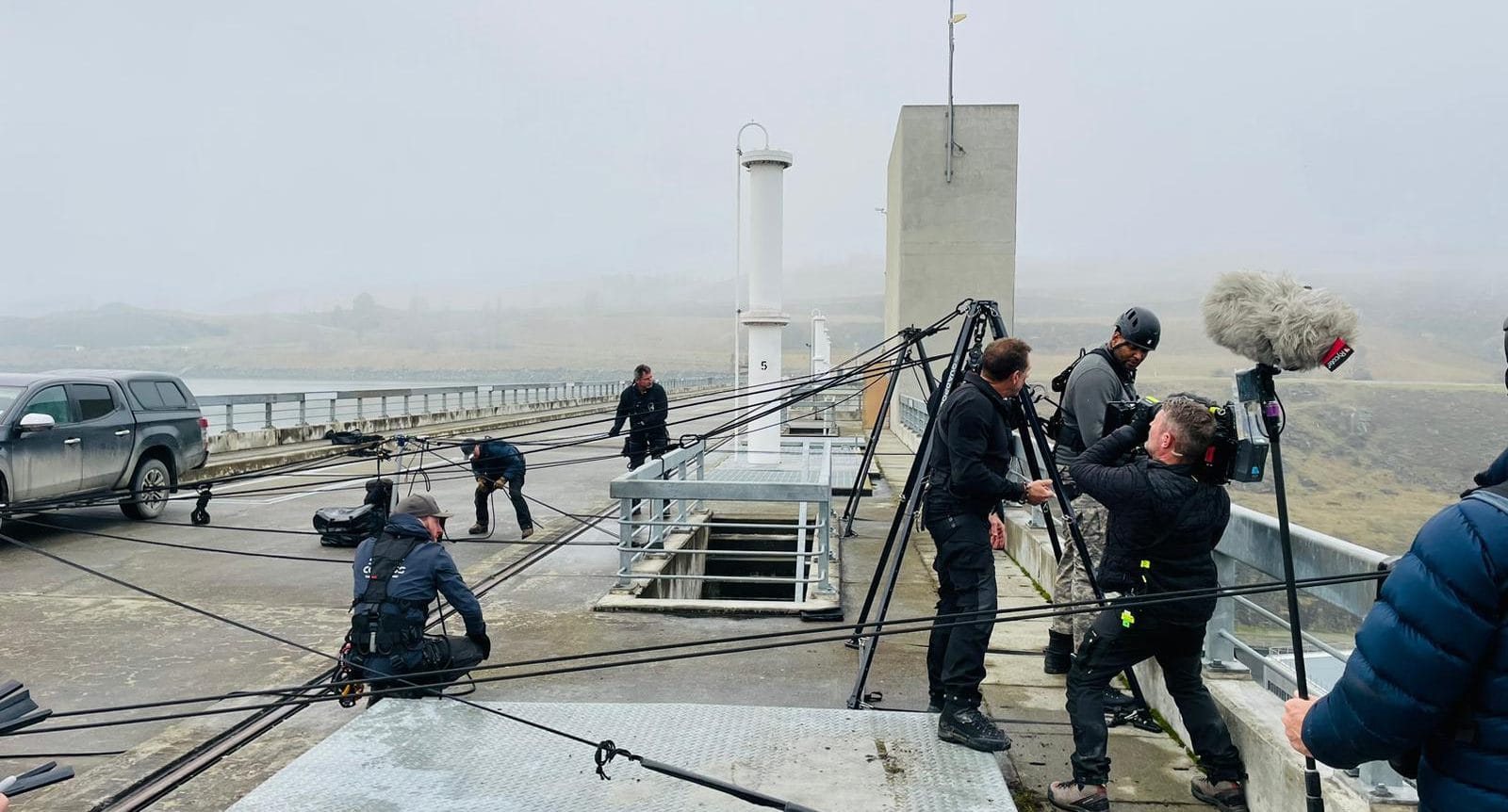
Every shoot carries risk. The job of a risk assessment for filming isn’t to eliminate that risk — it’s to identify it clearly, think through the controls, and make sure the right people have the right information before anyone is on the ground.
Most production teams know this. The challenge is producing a document that actually does the job, under real production conditions, when time and resource are tight.
This guide covers what a thorough risk assessment for filming should include, where the common gaps are, and how to approach it more efficiently without cutting corners.
Why it is more complex than it looks
A risk assessment for a studio shoot and one for a remote location production are entirely different documents. The principles are the same. The detail is not.
Filming introduces a specific combination of variables that generic risk assessment frameworks weren’t designed for: cast and crew with mixed experience levels, locations that change at short notice, activities that range from interviews to technical stunts, and timelines that leave limited room for iteration.
The result is that many productions end up with documents that are structurally sound but contextually thin — they cover the obvious risks but miss the specific ones. And the specific ones are usually the ones that matter.
What a risk assessment for filming needs to cover
A thorough document should address the following areas. Not all will be relevant to every shoot — but each should at least be considered.
People on location
Who is on the shoot matters as much as what they are doing. A risk assessment should capture the number and roles of everyone on location, their experience level relevant to the environment and activities involved, any specialists contracted to manage specific risks, and any local support — fixers, translators, local crew — and the basis on which they were selected.
Experience is particularly important and often underweighted. Whether cast and crew have worked in this type of environment before, whether they are competent with the specific activities of the shoot, and whether anyone can communicate in the local language all affect the risk profile significantly. A team of experienced professionals filming in a familiar environment is a different risk proposition to a mixed team filming somewhere new.
The production itself
What the shoot involves drives most of the specific risks. The assessment should cover the type of production and format, the specific activities planned — including anything that carries inherent risk such as driving, water work, heights, stunts or wildlife — and any equipment or technical setup that introduces additional hazards. It should also address travel and logistics, particularly for multi-location shoots or productions operating in remote areas.
Location and environment
Where you are filming is one of the most significant variables. The assessment needs to be specific — not just the country, but the region, the terrain, the environment type, and the specific locations within each shoot day. Environmental risks — weather, wildlife, terrain, access — vary significantly even within a small geographic area, and a generic description of a location rarely captures what matters on the ground.
For remote or challenging environments, this section needs particular depth. Productions filming in deserts, jungles, mountains, or extreme cold need to address environmental hazards explicitly: heat, cold, altitude, water, distance from medical support. These are the areas where experience from the field makes a real difference to the quality of the assessment.
Timing and duration
When a shoot takes place affects risk in ways that are easy to underestimate. Season, weather patterns, hours of operation, overnight logistics, and the duration of time in a given environment all need to be considered. A location that is straightforward in dry season may require significantly different controls in wet season. Night shoots carry different risks to day shoots. A crew that is on location for two weeks faces different fatigue and welfare risks to one that is in and out in a day.
Medical and welfare considerations
A risk assessment is not a substitute for a medical declaration process — that should run concurrently and separately. But the assessment should address the general medical provision for the shoot: what first aid capability is on location, how far the nearest medical facility is, what the evacuation plan looks like, and whether any medical risks specific to the environment need to be planned for.
Note that sensitive personal medical information should not be included in the risk assessment itself. Pre-existing conditions are managed separately, and any relevant control measures can be added to the document later with the individual’s consent.
Emergency planning
What happens if something goes wrong? The assessment should outline the emergency response plan for the shoot — who is responsible for what, how the team communicates in an emergency, what the evacuation routes and procedures are, and who the emergency contacts are. This section is often brief in practice. It should not be.
Where productions commonly go wrong
The most common failures in risk assessment for filming are not about not knowing what to include. They are about time pressure and process.
Starting from a previous document is standard practice — and not inherently wrong. The problem is when the adaptation is superficial: location names get changed, the obvious risks get a refresh, but the document still reflects the conditions of the last shoot rather than this one. Context-specific risks get missed. Local environmental factors don’t get captured. The experience level of this crew on this shoot isn’t reflected.
The second common failure is inconsistency across departments. When different parts of a production are working quickly and independently, the level of detail varies significantly. Some sections are thorough. Others are thin. The result is a document that creates a false sense of coverage.
A more efficient approach
The most effective risk assessments for filming start from a structured first draft that reflects the specific details of the shoot — not a previous one, and not a generic template. That draft then gets reviewed and developed by someone with relevant experience.
Secret Compass AI generates that first draft based on the specifics of your production: who is on the shoot, what the activities involve, where you are filming, and when. It covers the areas above — people, activities, location, timing, medical provision and emergency planning — and produces a structured document your team can review, adapt and sign off.
It is built for the day-to-day reality of TV and film production. For productions requiring specialist risk management in complex or high-risk environments, Secret Compass provides that directly.
Try Secret Compass AI on your next Tv & Film production
Create a first draft in minutes.
Or see how it fits your workflow:
Frequently asked questions
It should cover the people on location and their experience, the specific activities and equipment involved, the location and environmental conditions, the timing and duration of the shoot, medical provision and emergency planning. The level of detail needed in each area will depend on the specific production.
Responsibility typically sits with the producer or production manager. On larger productions, a dedicated safety supervisor may lead the process. Regardless of who drafts it, final review and sign-off should always sit with someone who has relevant experience and understands the specific conditions of the shoot.
Detailed enough to reflect the actual conditions of the shoot. A simple studio setup requires a different level of detail to a remote location production. The test is whether someone reading the document would have a clear picture of the risks involved and what is being done to manage them.
It should address medical provision, first aid capability and emergency planning. Personal medical information about cast and crew is handled separately through a medical declaration process and should not be included in the risk assessment itself.
It should be reviewed whenever conditions change significantly — a new location, a change in planned activities, a change in crew, or a change in environmental conditions. A document written at pre-production stage may not reflect the reality of the shoot by the time it starts.
Not without meaningful adaptation. Each location carries its own specific hazards, and a single document rarely covers them adequately. Where multiple locations share similar characteristics, a core document can be adapted — but it should always be reviewed against the specifics of each site before filming begins.
Post tags: