Staring at a blank document wondering where to start is one of the most familiar feelings in production risk management. You know you need a risk assessment that fits the shoot you’re planning. You’re just not sure how to get there without either missing something important or producing a document so long and complicated that nobody reads it.
The good news is that the purpose of a risk assessment is actually pretty simple: it’s to lower the risks of something happening to “as low as reasonably possible” by asking yourself “what can go wrong, how likely is it to happen and what is the consequence if it does” and then what can you do to reduce that likelihood and consequence. You only need to think about foreseeable risks, the ones most likely to occur and with the greatest consequence, and then put mitigations in place to lower the risk to as low as reasonably practicable.
A good risk assessment does two things well. First, it informs your planning if you’re going to a remote island, the risk assessment process should be what tells you that you need life-jackets for the boat journey, a well-qualified medic, and a satellite phone for emergencies. Second, it helps everyone on the production understand what the biggest risks are so they can work together to manage them.
Don’t start with a blank document
The most common mistake is sitting down to write a risk assessment in isolation. Instead, get together with key production colleagues, find a large piece of paper or a whiteboard, pick up some coloured pens and start a mind-map.
Write down where you’re going, what activities you’ll be doing there, who is going, when you’re going, how you’ll get around the location, where you’ll be staying, and who you’ll be working with; fixers, translators, local crew. Once you have it all in front of you, the initial hazards start to pop out naturally.
On a jungle shoot filming bonobos in the DRC, for example, mapping out who, what, where, when and how immediately surfaces hazards that a generic template wouldn’t flag: extended duration living in a remote environment, complex wildlife risk, crew welfare over weeks rather than days, limited evacuation options. None of that emerges from a blank risk assessment form. It emerges from thinking through the specifics of the shoot out loud, together.
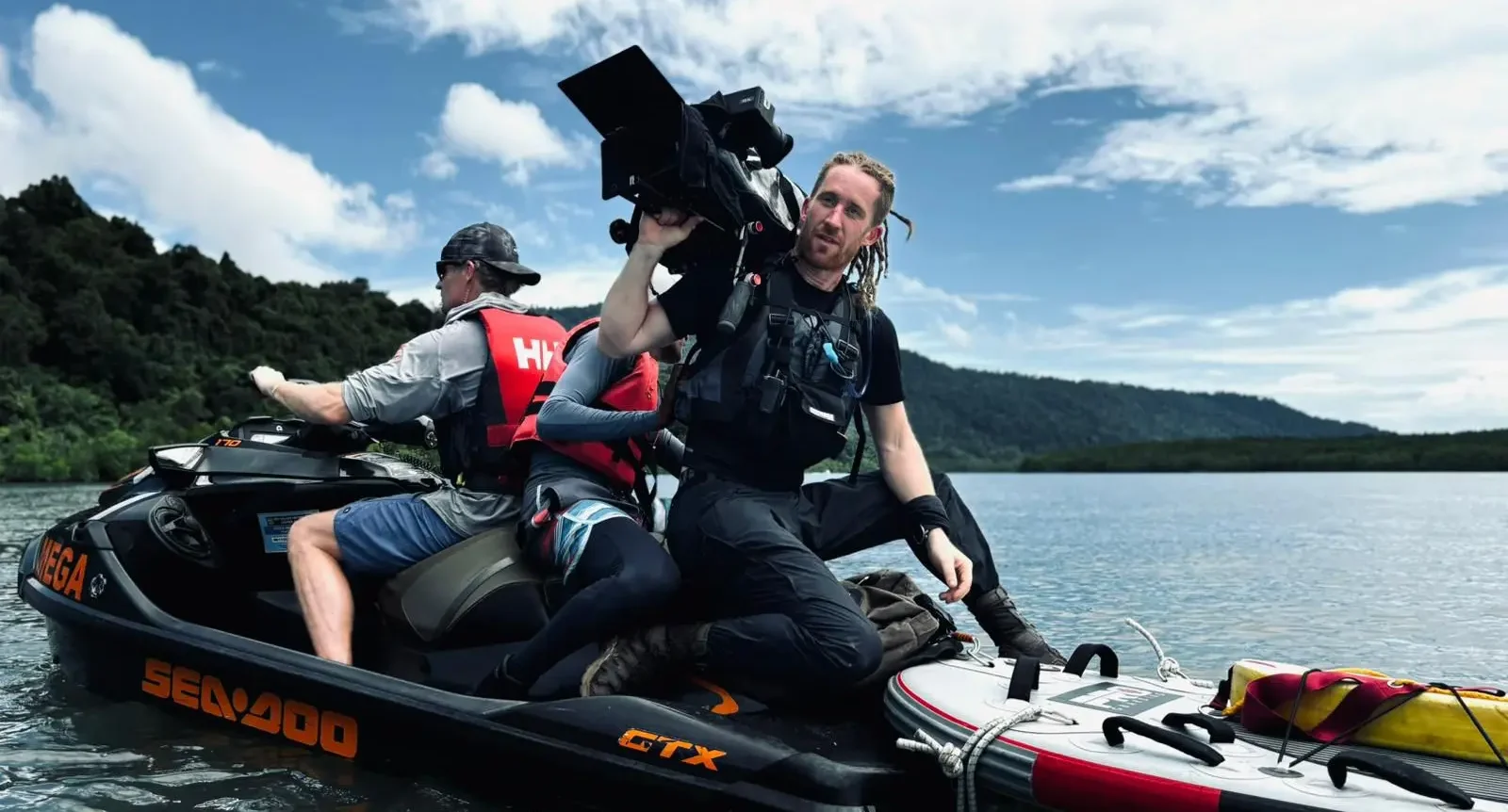
Perhaps you’re on a shoot that involves extensive driving between locations; that increases the risk of a road traffic accident. You might be conducting activities at sea, which brings in the risk of boat breakdown or drowning. You may be travelling to altitude, or to a country prone to earthquakes. None of this needs to be complicated. You’re just looking at what you’ve written down and asking what could go wrong.
Structure your hazards under clear headings
Once you have some thoughts down, it really helps to organise them under structured section headings. This gives the document a consistent framework and makes it far easier for others to review and act on.
Team — hazards related to the people on the shoot. Inexperienced crew, complacency, behavioural issues, language barriers. Experience levels matter enormously. A crew member who has never filmed in this type of environment before presents a different risk profile to one who has done it many times, even if their production credits are comparable.
Medical — location-specific health risks. Malaria and other diseases, altitude sickness, heat or cold-related illness, access to medical care. This section should reflect the specific environment, not a generic list.
Environment — the physical conditions of the location. Weather, terrain, wildlife, natural hazards such as earthquakes, flooding or extreme temperatures. Be specific — a mountain location in summer and the same location in winter are entirely different risk environments.
Security — local crime, civil unrest, checkpoint risks, territorial control, cyber-risk. For international shoots this section is often underwritten. Local context matters here and generic assessments rarely capture it adequately.
Activities — the specific hazards associated with what you’re doing on the shoot. Climbing, swimming, working in boats, working at height, stunts, operating with animals. Each activity has its own risk profile and should be assessed specifically. Working at height on a rope access rig above an urban skyline carries different risks to climbing in a remote mountain environment, even if both involve ropes and harnesses.
Transport and accommodation — air and ground transport hazards, vehicle condition and driver competence, road quality, border crossings, accommodation safety. These are often the highest-frequency risks on a production and the most consistently underestimated.
Legal — permits, authorisations, filming restrictions, local laws. Getting this wrong doesn’t just create a legal problem; it can bring a shoot to a halt.
Assess likelihood and consequence for each hazard
Once you have your hazards listed, work through each one and assess how likely it is to occur and what the consequence would be if it did. A simple low, medium, high rating for likelihood and consequence gives you enough to prioritise where to focus your mitigation effort.
Take inexperienced crew as an example. If some of your team are new to the role or have never filmed in this type of location before, the consequence might be an inability to predict situations, slower adaptation to the environment, failure to bring the right clothing or kit, or a lack of awareness of local security issues. That’s a meaningful consequence, and it tells you what your control measures need to address.
Define practical control measures
For every hazard, define what you will do to lower the risk to an acceptable level. Control measures should be specific and actionable not vague commitments. For inexperienced crew, that might mean a pre-shoot briefing or additional training, a kit list provided in advance, or a buddy system pairing less experienced crew with more experienced colleagues. The control measures column is where a risk assessment earns its keep. Vague entries – “appropriate precautions will be taken” – are not control measures.
Write a risk summary at the top
Once the body of the document is complete, write a summary at the top outlining the key risks you want everyone to be aware of and what you’re doing to lower them to an acceptable level. At the end of the summary, outline the residual risks. Not all risk can be eliminated, and making sure everyone understands what residual risk remains is part of doing the job properly.
Use the process to inform your next steps
Finally, take a step back and look at what the document is telling you. Does the risk assessment reveal that you need to adjust the schedule? Bring in specialist support; a remote medic, a security advisor, a water safety team? Source additional equipment? The sooner you start this process, the longer you have to act on what it reveals.
Open-source resources can help inform the process. For international shoots, the FCDO travel advisories provide country-specific safety and security information.TravelHealthPro covers disease risks by country. The HSE provides guidance for UK-based activities. These provide a useful baseline but don’t replace specialist expertise for complex or remote productions.
For a full breakdown of what each section of a production risk assessment should cover, read our risk assessment for filming guide →
Where Secret Compass fits
For productions that want expert support through this process, Secret Compass works with production teams from the earliest stages – first-look workshops to identify key risks, full risk assessments tailored to the specific shoot, and safety plans and protocols. Our team has managed risk on 350+ productions across 111 countries for Netflix, BBC, National Geographic and Disney+, from abseiling Will Smith into active volcanoes in Vanuatu to filming in Syria and Afghanistan.
Try Secret Compass AI on your next Tv & Film production
For productions that need a structured starting point to draft their own risk assessment, Secret Compass AI generates a tailored first draft based on your shoot details covering team, activities, location, medical and emergency planning – in minutes. Your team reviews, adapts and signs off.
Resources
- FCDO travel advisories — country-specific safety and security information
- TravelHealthPro — disease risks and health recommendations by country
- HSE — guidance for UK-based activities and employer responsibilities
Frequently asked questions
Start with a mind-map rather than a blank document. Bring together key production colleagues and map out where you’re going, what you’ll be doing, who’s going, when, and how you’ll get around. Hazards will start to emerge naturally from that process. From there, organise them under structured headings and work through likelihood, consequence and control measures for each.
At a minimum: team and personnel, medical, environment, security, activities, transport and accommodation, and legal. Each section should reflect the specific conditions of this shoot rather than a generic list of hazards.
Detailed enough to reflect the actual conditions of the shoot and to be useful to the people who will read it on the ground. A focused document that captures specific risks and practical control measures is more useful than a lengthy one full of generic hazards.
It should never be done in isolation. Key production colleagues — location manager, production manager, safety supervisor where applicable — should all contribute. The people who know the shoot best are the ones best placed to identify what can go wrong.
As early as possible. The sooner you start, the longer you have to act on what the process reveals — adjusting the schedule, bringing in specialist support, sourcing additional equipment or medical provision.
For international shoots: FCDO travel advisories for country-specific safety and security information, TravelHealthPro for disease risks by country. For UK-based activities: HSE guidance. These provide a useful starting point but don’t replace field expertise for complex or remote productions.
Post tags: